
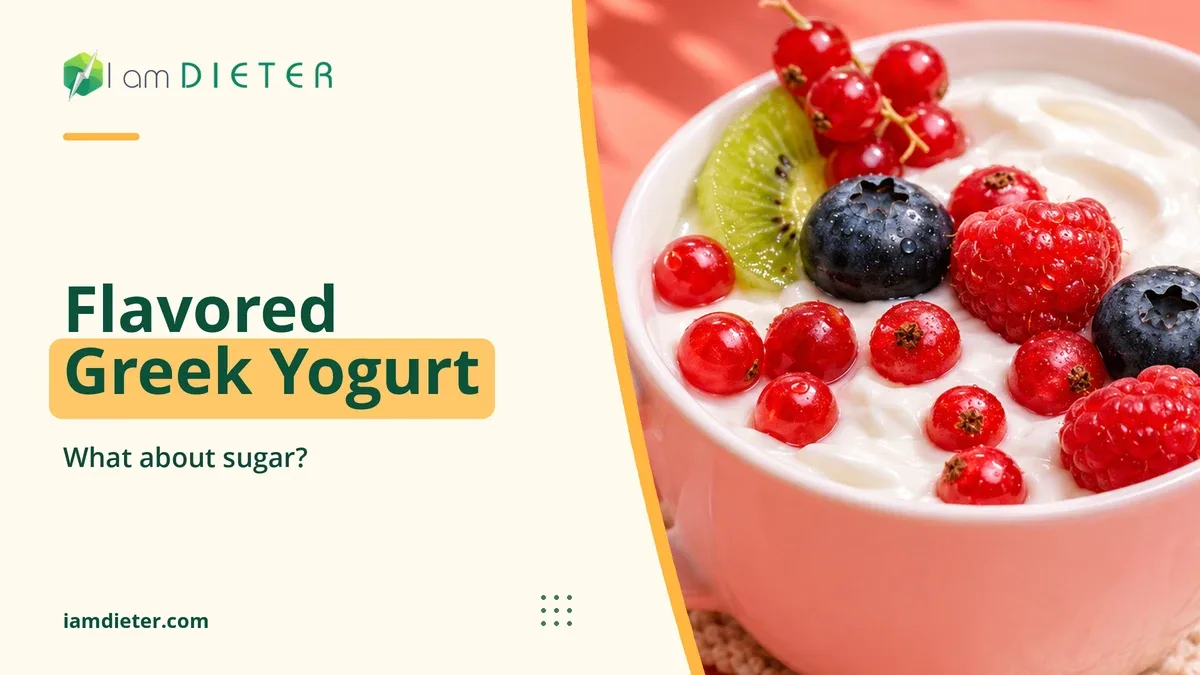
A strawberry Greek yogurt can work as a snack or a quick breakfast. To decide whether a particular pot suits you, look at the calories, protein and added sugar in the amount you will actually eat. A “high protein” claim tells you about one nutrient. It gives you little information about how sweet the yogurt is or how much energy the whole pot provides.
Flavored Greek yogurt vs. plain: compare equal portions
The Saudi-market examples below come from figures previously reported in this guide. The original comparison used a 160 g pot of strawberry or berry yogurt and 100 g of plain low-fat yogurt. The last column puts the plain yogurt on the same 160 g basis so you can compare them spoonful for spoonful.
| Nutrient | Berry-flavored, 160 g pot | Plain low-fat, 100 g | Plain low-fat, 160 g (calculated) |
|---|---|---|---|
| Energy | 214 kcal | 66 kcal | 106 kcal |
| Carbohydrate | 24.5 g | 5 g | 8 g |
| Protein | 7.5 g | 7 g | 11.2 g |
| Fat | 9.6 g | 2 g | 3.2 g |
| Added sugars | Not reported | Not quantified | Not quantified |
For a 160 g portion, multiply the value per 100 g by 1.6. For example, 66 kcal × 1.6 = 105.6 kcal, rounded to 106 kcal. At the same weight, the flavored example has about 108 more calories and 3.7 g less protein. The products also differ in fat content, so sugar alone cannot explain the difference. These are illustrative figures. The original guide did not identify the exact packs, and other brands or recipes can differ.
How much of the carbohydrate is added sugar?
The 24.5 g in the flavored pot is total carbohydrate. Converting that figure directly into teaspoons of added sugar would count naturally occurring milk sugar (lactose) and sugars from the fruit as though the manufacturer had added them. Even the “total sugars” line includes both naturally occurring and added sugars.
Start with the ingredients. A strawberry yogurt can contain both fruit pieces and added sugar. If you see sugar or syrup on the list, you know the recipe includes a sweetener. To find the quantity, look for an “added sugars” line and check whether the amount is per serving, per pot or per 100 g. When the pack gives only total sugars, the exact added amount remains unknown. Plain unsweetened yogurt can still list sugars because milk contains lactose.
What about high-protein yogurt drinks?
The pomegranate-flavored drink in the original guide provided about 27 g of protein, 37 g of carbohydrate and 317 kcal per 330 ml bottle. Those are figures for the entire bottle. Half a bottle (165 ml) would provide roughly 13.5 g of protein, 18.5 g of carbohydrate and 159 kcal, calculated by dividing each bottle value by two.
If you are tracking carbohydrates, compare the amount you plan to drink with your own daily target. If your goal is a snack after exercise, read the protein and energy figures together. The same bottle can be a convenient larger snack for one person and more than another wants between meals.
Make your own berry yogurt bowl
- Spoon plain Greek yogurt into a bowl. Choose full-fat or low-fat according to the taste and portion you prefer.
- Add half a cup of berries or chopped strawberries. Mash a few with a fork and stir them through the yogurt for a sweeter-tasting base, leaving the rest whole for texture and fiber.
- Taste before sweetening. If you prefer it sweeter, add a little stevia or measure a small spoonful of honey. Honey contributes added sugar, so include it if you are tracking your intake.
Making the bowl yourself lets you choose how much sweetener goes in. The actual sugar difference depends on the fruit, any honey and the ready-made pot you are comparing it with.
Related dairy guides
- Nada plain full-fat Greek yogurt, small pot
- Nadec plain Greek yogurt: calories and protein
- Milk, cheese and yogurt guides
Sources and data notes
- I Am Dieter’s original Saudi-market comparison provides the historical pot and bottle figures shown above. Check the label on the exact flavor and size you buy for its current formulation.
- FDA: Added Sugars on the Nutrition Facts Label explains the distinction between total and added sugars, including milk sugar and honey.
- Nada: full-fat strawberry Greek yogurt provides a Saudi product example listing both strawberry pieces and sugar. It is cited for the ingredient example only.
This information is for general education and is not medical advice.