
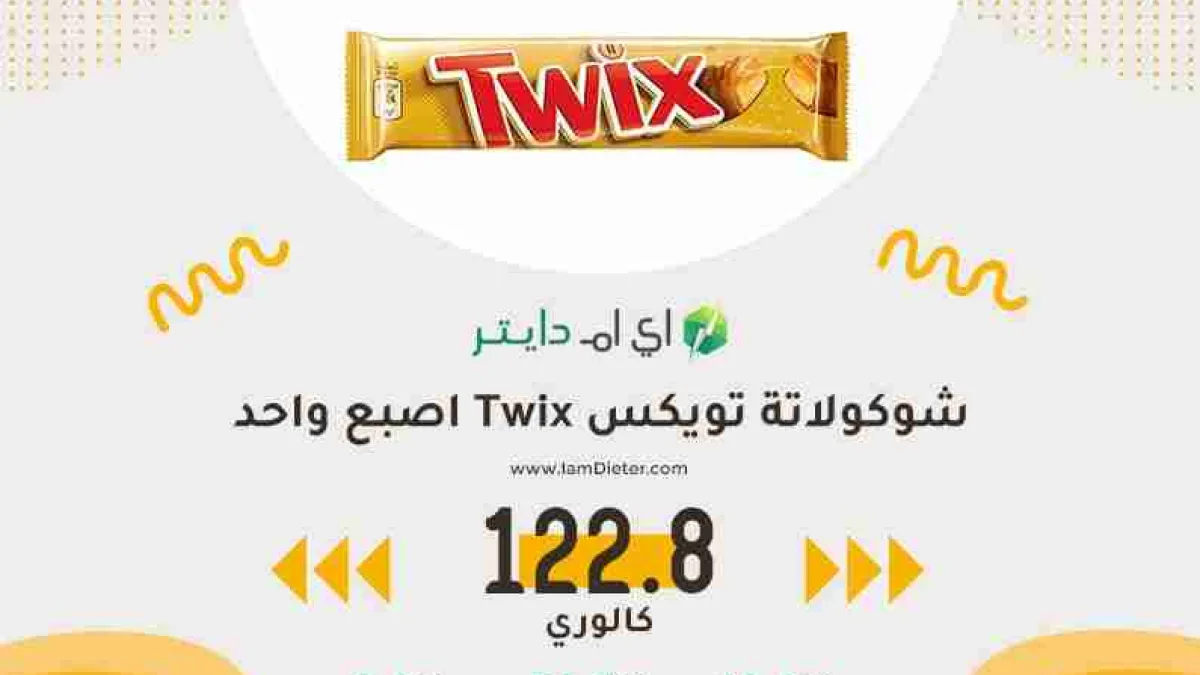
Twix chocolate calories: 122.8 kcal for a 25 g finger according to the previous data. A single finger and a whole pack are different units; if your pack contains two identical 25 g fingers, their calculated energy is 245.6 kcal.
Without a matching recent label, we have retained the nutritional data saved in the previous article, revised the wording and corrected clear errors. We have not filled missing nutrients with estimates. Figures derived by adjusting the serving weight are mathematical conversions of older data, and their validity depends on the accuracy of the previous source and its match to the product you use.
Nutrition facts per 100 g and serving
| Nutrient | Per 100 g | Reference 25 g finger |
|---|---|---|
| Energy (kcal) | 491.2 | 122.8 |
| Fat (g) | 23.9 | 5.975 |
| Carbohydrate (g) | 64.68 | 16.17 |
| Protein (g) | 4.4 | 1.1 |
| Saturated fat (g) | Not stated | Not stated |
| Trans fat (g) | Not stated | Not stated |
| Cholesterol (mg) | Not stated | Not stated |
| Sodium (mg) | 160 | 40 |
| Fibre (g) | 1.5 | 0.375 |
| Total sugars (g) | 48.9 | 12.225 |
| Added sugar (g) | Not stated | Not stated |
One finger or the twin pack?
The official Twix Middle East website presents the 50 g Twin product, which consists of two fingers. That describes this size, not every Twix package. Mini sizes, ice cream and other products are also available; do not use the 25 g record simply because Twix appears on the wrapper.
The values here were retained from the previous article for a 25 g finger because the official page we reviewed does not provide a matching nutrition table to replace them. If a pack is divided into two equal fingers, you can use half its energy after checking the weight. If you ate half a finger, using the actual weight or the proportion eaten is clearer than recording a whole finger.
Correcting the description of palm oil
The old article described palm fat as evidence of hydrogenation, which is not a valid inference. Palm oil is not automatically hydrogenated; the terms hydrogenated or partially hydrogenated must be explicitly stated in the ingredient list. Saturated and trans fats are not different names for the same nutrient.
We removed the warning based on this confusion and did not infer a saturated or trans fat figure absent from the saved data. The old ingredients refer to biscuit, caramel, chocolate and milk, but we do not confirm the current pack's layer proportions from an old text. For ingredients, allergens and country of manufacture, prioritise the label of the product you purchased over a general description.
How to calculate your portion
Calories consumed = 122.8 × weight eaten in grams ÷ 25. This formula uses the serving basis in the table. Do not convert millilitres into grams without a documented relationship for the product, and do not use the weight of a peel or wrapper when the table refers to edible food. Keep the unit next to the number so you can check the calculation without confusing quantity with calories.
How to read the table without counting anything twice
Start with the serving name and weight before looking at the calories. The 100 g column gives a common basis for comparison, while the serving column identifies the basis of the original data. If you ate a different amount, do not choose the nearest figure at random; use the actual weight and its ratio to the stated serving. Values not stated in the table indicate missing data, not that the nutrient is absent or has a value of zero.
A mathematical conversion changes only the quantity represented; it does not establish that today's recipe matches the previous one. Rounding serving figures may also cause a small difference when converting to 100 g. This is why we do not recalculate the energy from fat, carbohydrate and protein and replace the reported energy with it. If your current package conflicts with this article, give its label precedence and keep each comparison tied to its source.
Calculating the amount in a meal
Place the food in a container on a tared kitchen scale and record the amount you actually ate. If you save part of the pack for later, do not record the entire pack for one meal. When sharing, do not assume everyone received the same amount simply because it came from the same pack; add the weights of your portions or use a clear division that can be checked later.
A meal can include bread, milk, oil, sauce or a drink, each with its own nutrition data. Add up the ingredients rather than treating the energy of the main ingredient as that of the entire meal. For a larger recipe, keep track of ingredient weights before dividing it and identify your share of the yield. Water added without food contributes no energy, but it can change the weight or volume used to divide servings.
Comparison, storage and the information you need
When comparing products, first use the same weight, then compare the amount you intend to eat. A small pack may have less total energy simply because it contains less food. Also check saturated fat, sodium and sugars when these figures are available; fewer calories does not automatically mean less of every other nutrient. Do not turn this comparison into a medical judgement or a guarantee that a product suits everyone.
Check the expiry date and storage instructions on the pack rather than relying on a general shelf life from an old description. Keep a photo of the label, the product version and serving weight when recording the product. If you avoid an allergen, ingredients and precautionary statements are separate from calorie information. Do not judge suitability by taste or low protein content, and do not interpret “may contain” as a guarantee that an ingredient is absent.
Frequently asked questions
How many calories are in Twix chocolate?
122.8 kcal for a 25 g finger according to the previous data. A single finger and a whole pack are different units; if your pack contains two identical 25 g fingers, their calculated energy is 245.6 kcal.
Does the value per 100 g refer to the whole pack?
No. It is a reference weight for comparison. A pack may contain more or less, and the amount eaten may be only part of it. Check the net weight and label to establish the relationship before adding figures.
Does a nutrient that is not stated mean zero?
No. We leave it as not stated when a documented value is unavailable. It cannot be inferred from the product name, ingredients or package appearance.
Can these figures be used for all flavours?
No. Flavour, size, market and formulation may differ. Use the data only for the version described and give the current pack label precedence if it differs.
Related articles on I Am Dieter
Sources
Note: This information is for general education and is not medical advice.