Mountain Dew is a caffeinated carbonated soft drink consumed by many young people in Saudi Arabia. Sugar-sweetened soft drinks may contribute substantially to a person's energy intake; diet versions differ in sugar content. This article describes the recorded nutrition and ingredients of Mountain Dew.
Mountain Dew calories per 330 ml
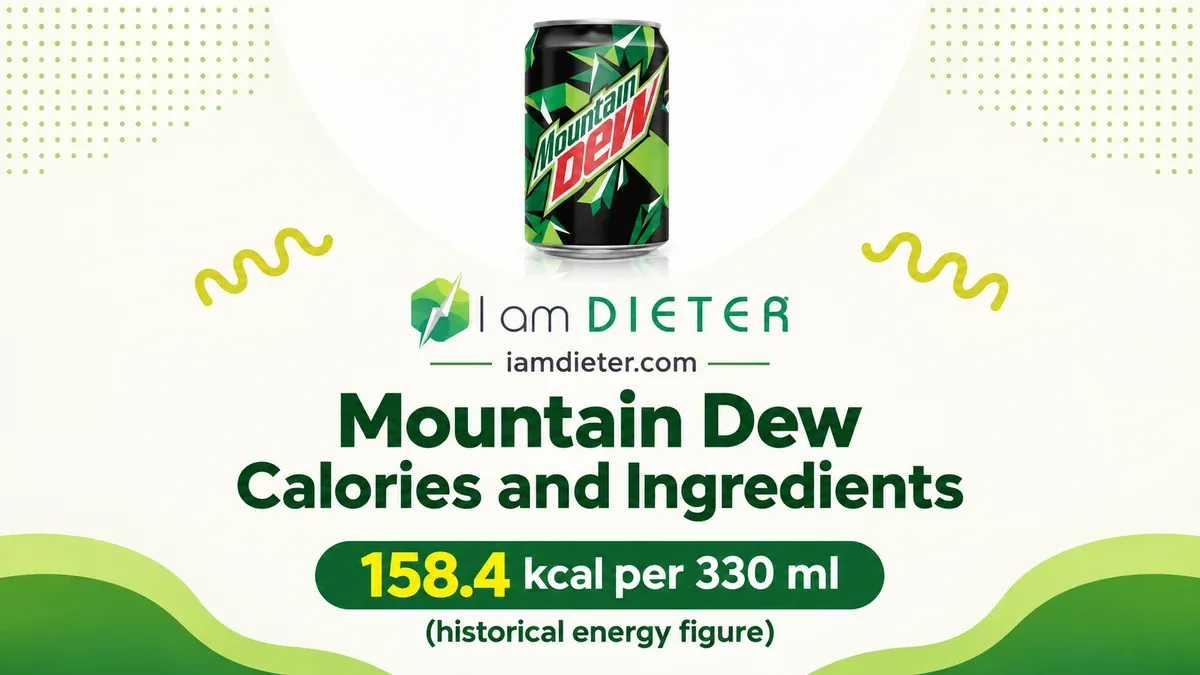
A 330 ml quantity contains about 158.4 kcal, 39.6 g of carbohydrates and no recorded fat or protein, based on the older product information in the Arabic article. It contains 39.6 g of sugars. These are historical values, not a confirmation of the current pack.
| Nutrient | Amount per 330 ml |
|---|---|
| Energy | 158.4 kcal |
| Carbohydrates | 39.6 g |
| Sugars | 39.6 g |
| Fat | 0 g |
| Protein | 0 g |
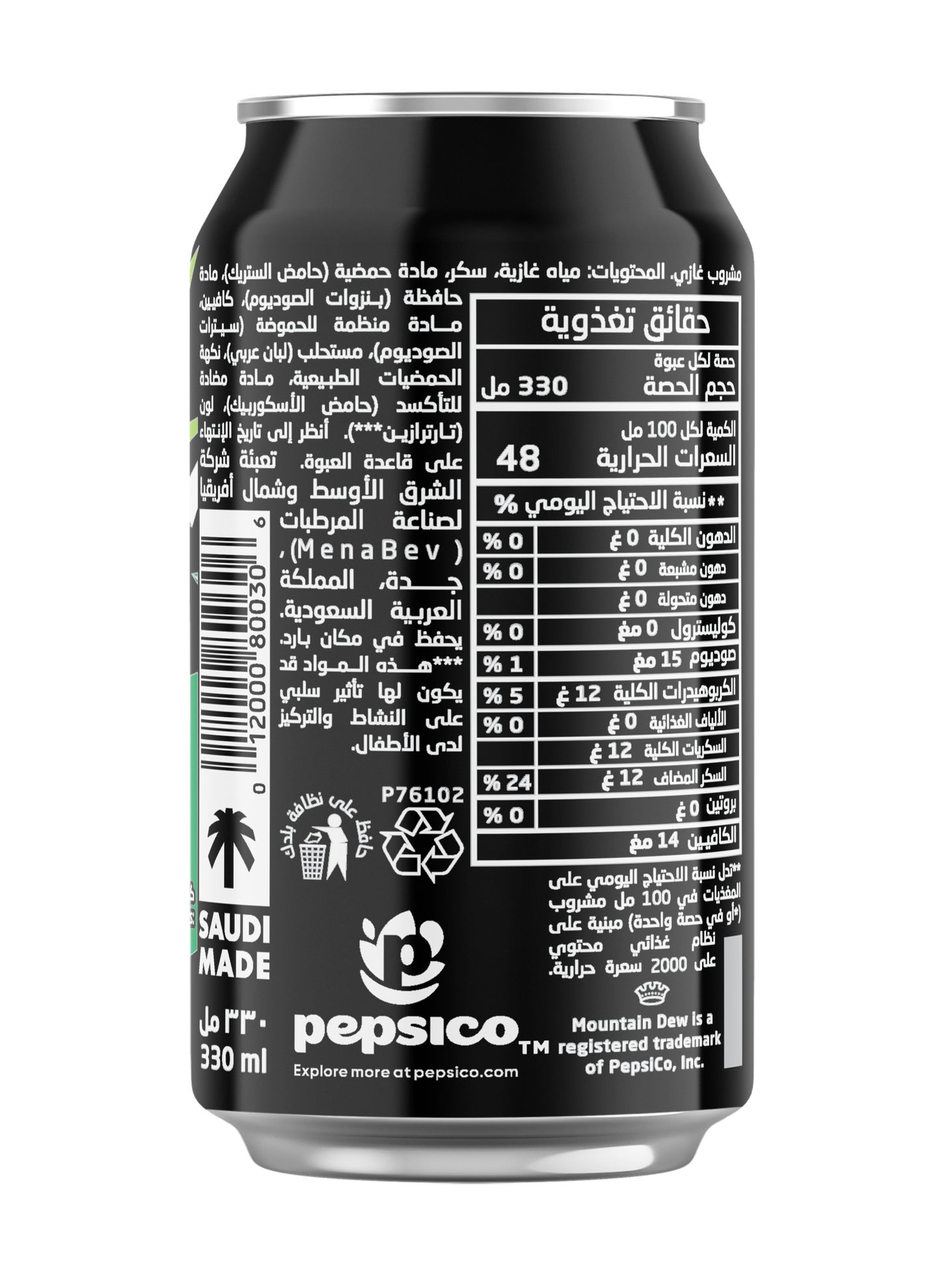
Sodium and caffeine in the 330 ml Saudi can, bottled in Jeddah
The photographed Saudi can label states 15 mg sodium and 14 mg caffeine per 100 ml. Multiplying by 3.3 gives 49.5 mg sodium and 46.2 mg caffeine for the full can. These values refer specifically to the pictured can. The energy and sugar data above remain from the earlier article record.
Mountain Dew ingredients
- Carbonated water
- Sugar
- Citric acid (acidulant)
- Sodium benzoate (preservative)
- Caffeine
- Sodium citrate (acidity regulator)
- Gum arabic (emulsifier)
- Natural citrus flavour
- Ascorbic acid (antioxidant)
- Tartrazine (the original label notes that this colour may have an adverse effect on activity and attention in children)
Important notes
- The product was bottled by the Middle East and North Africa Company for Manufacturing Refreshments, Jeddah, Saudi Arabia.
- Mountain Dew contains tartrazine, a colour that may have an adverse effect on activity and attention in children.
Verify the current can's nutrition and ingredients before applying these values to other formulations or sizes.
Related reading: Kinza nutrition by flavour.
Note: This information is for general education and is not medical advice.