
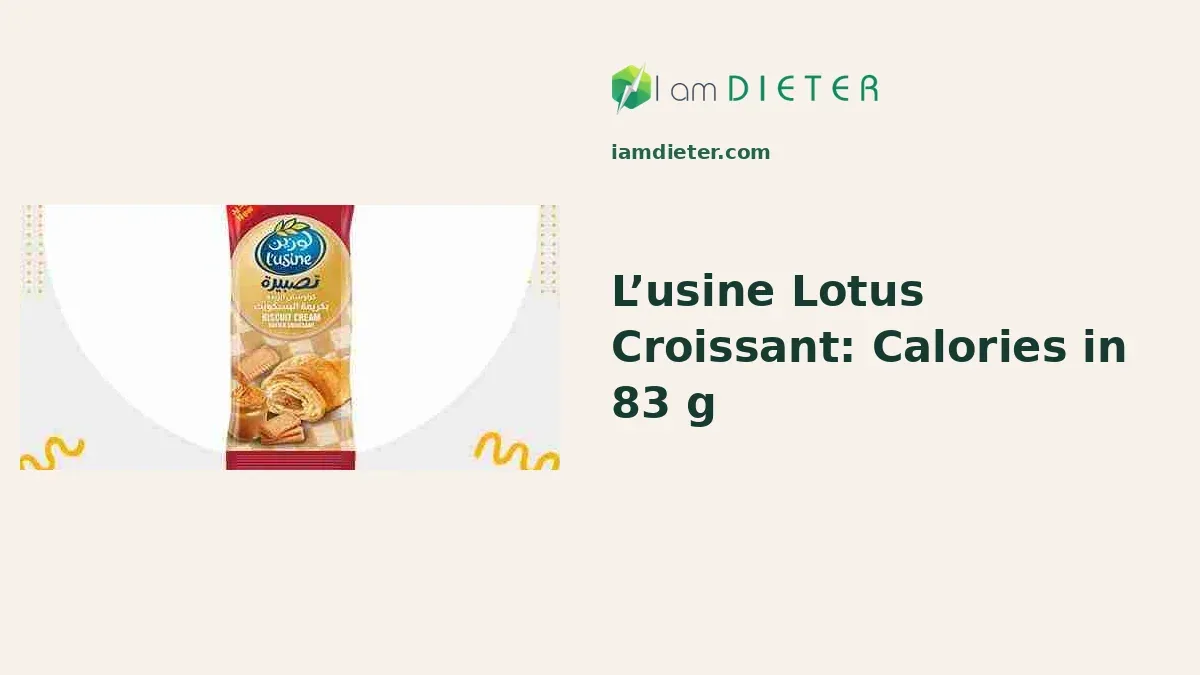
The previously documented 83 g serving provides 419 kcal. This applies to the specific flavour and serving on the earlier product label, not every pack sold today.
Nutrition per 83 g and 100 g
| Nutrient | 83 g | 100 g (calculated) |
|---|---|---|
| Energy (kcal) | 419 | 504.82 |
| Fat (g) | 27 | 32.53 |
| Saturated fat (g) | 11 | 13.25 |
| Trans fat (g) | 0.7 | 0.84 |
| Cholesterol (mg) | 37 | 44.58 |
| Sodium (mg) | 229 | 275.9 |
| Carbohydrates (g) | 36 | 43.37 |
| Fibre (g) | 0.9 | 1.08 |
| Sugars (g) | 13 | 15.66 |
| Added sugars (g) | 11 | 13.25 |
| Protein (g) | 8 | 9.64 |
Source: nutrition figures retained from the earlier I Am Dieter article. Current matching Saudi and Kuwaiti labels have not been independently verified; missing values are not zero. The 100 g column is calculated, not a new label measurement.
Serving size and calculation
To calculate energy for a weighed portion, multiply 419 kcal by the portion weight in grams and divide by 83 g. For 100 g: 419 × 100 ÷ 83 = 504.82 kcal. Check your own pack's serving and net weight first.
Ingredients and allergens
Wheat flour, biscuit cream filling (wheat flour, sugar, palm and rapeseed oils and cinnamon), butter, water, wheat gluten, yeast, milk powder, salt, emulsifiers, whey and preservatives.
One whole croissant weighs 83 g; an equal-weight half is about 209.5 kcal. The prior label states wheat, milk and soy, with possible egg, hazelnut and sesame. No direct blood-glucose response measurements are supplied.
Sources
Earlier Arabic label transcription on I Am Dieter (related product reference); the earlier article's own figures remain historical.
For general education only, not medical advice. Disclaimer.