
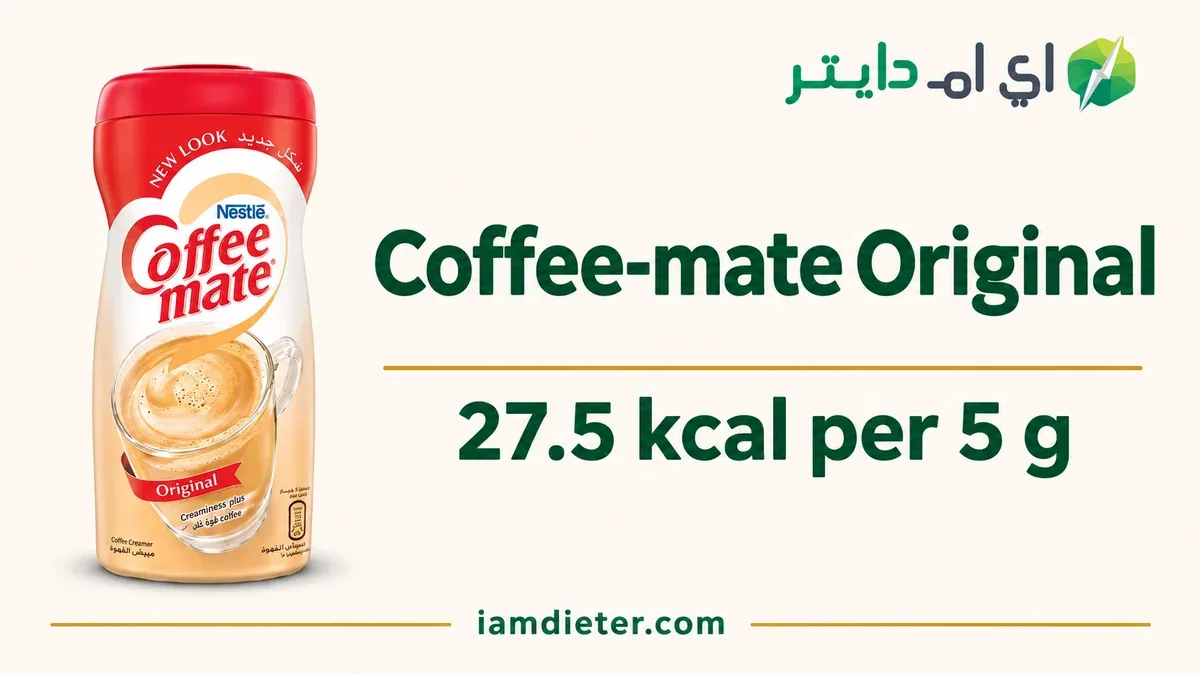
A 100 g portion of Coffee-mate Original powdered creamer provides 550 kcal according to the Saudi 400 g pack information. A weighed 5 g portion provides 27.5 kcal and 10 g provides 55 kcal. These figures cover the creamer alone, before adding sugar or anything else to the coffee.
This guide covers Coffee-mate Original powder. Liquid creamers, other flavours and ready-made mixes containing coffee, sugar and creamer need their own values.
Coffee-mate Original nutrition facts
| Nutrient | 100 g | 5 g | 10 g |
|---|---|---|---|
| Energy | 550 kcal | 27.5 kcal | 55 kcal |
| Protein | 2.2 g | 0.11 g | 0.22 g |
| Carbohydrates | 57.7 g | 2.885 g | 5.77 g |
| Total sugars | 8.8 g | 0.44 g | 0.88 g |
| Fat | 34.5 g | 1.725 g | 3.45 g |
| Saturated fat | 31.6 g | 1.58 g | 3.16 g |
| Sodium | 230 mg | 11.5 mg | 23 mg |
The 5 g and 10 g amounts are weighed examples. Neither is a fixed conversion for a teaspoon or tablespoon. Separate figures for fibre, trans fat and added sugars are not listed and should not be recorded as zero. The sodium value was converted from 0.23 g per 100 g to 230 mg, using 1 g = 1,000 mg.
How much creamer goes into your cup?
Weigh the amount you usually add instead of judging it by how full the spoon looks. Calculate 550 kcal ÷ 100 g × weight of the powder in grams. For 8 g, that gives 550 ÷ 100 × 8 = 44 kcal. Using that amount in each of two cups adds up to 88 kcal from creamer over the day, before the rest of the drink.
To log your cup, list the coffee, the weight of creamer and the weight of any sugar. This avoids counting a mix twice or attributing the sugar’s calories to the creamer. Extra water dilutes the flavour and increases the volume while leaving the amount of powder the same.
Ingredients and milk protein
The listed ingredients include tapioca syrup, hydrogenated palm kernel oil, an acidity regulator, milk protein, emulsifiers, flavourings, an anti-caking agent and salt. The milk protein matters for anyone checking allergens. The description “non-dairy creamer” does not establish that the product is free from milk allergens.
Check your pack’s ingredient list, particularly if it is imported or you change size or flavour. Total sugars and total carbohydrates are separate entries in the table. Use the appropriate figure when logging your meal.
Why might another pack list different values?
Formulations and published figures can vary by market and pack. Match the product description and label before calculating. Use fat and energy from the same version. This guide uses one consistent table for the Saudi 400 g pack. For brand information, see the Coffee-mate profile.
Frequently asked questions
Does one spoonful always weigh 5 g?
No. The weight depends on the size of the spoon and how you fill it. The examples here use weighed powder.
How many calories are in the whole pack?
The calculation is 550 × 4 = 2,200 kcal for the whole 400 g pack. The pack is intended for multiple uses.
Related reading
Note: This information is for general education and is not medical advice.
Sources
- Nestlé Professional Saudi Arabia: Coffee-mate Original 400 g — ingredients and nutrition per 100 g. Smaller portions and sodium in milligrams are calculated.